What this page is
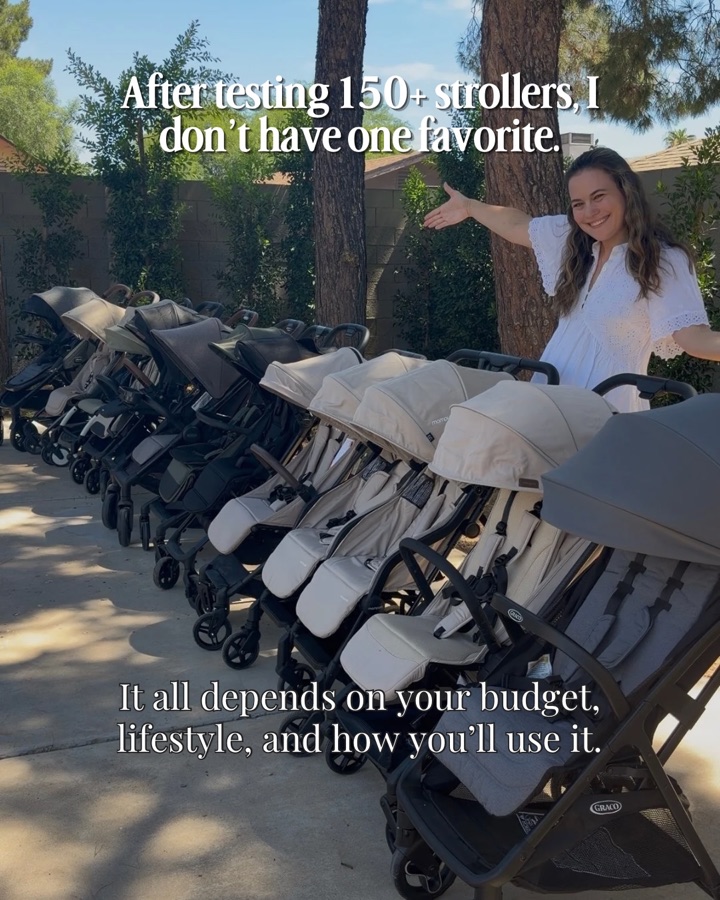
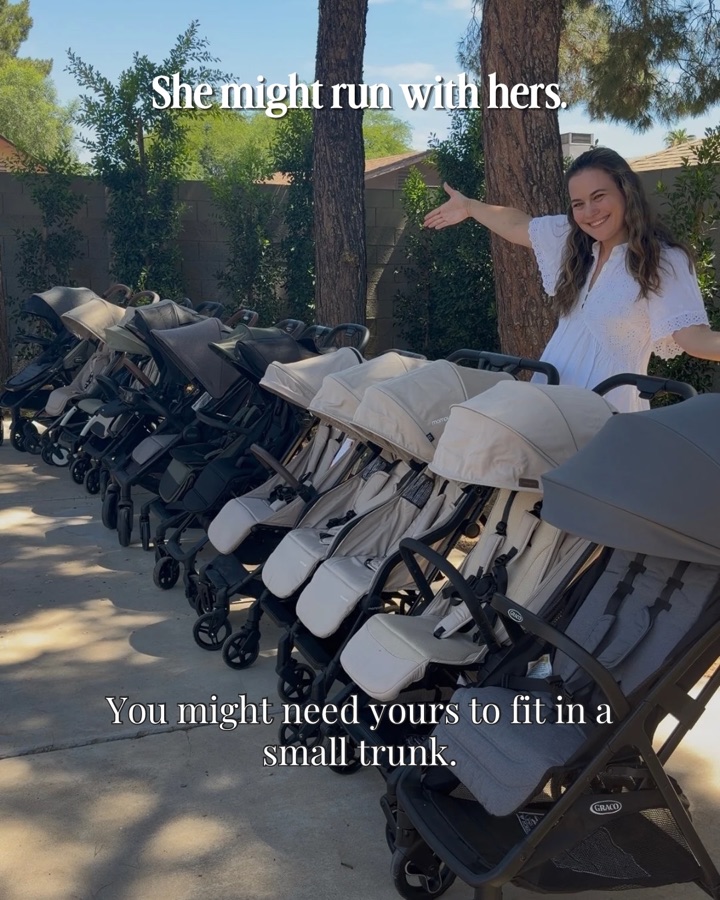
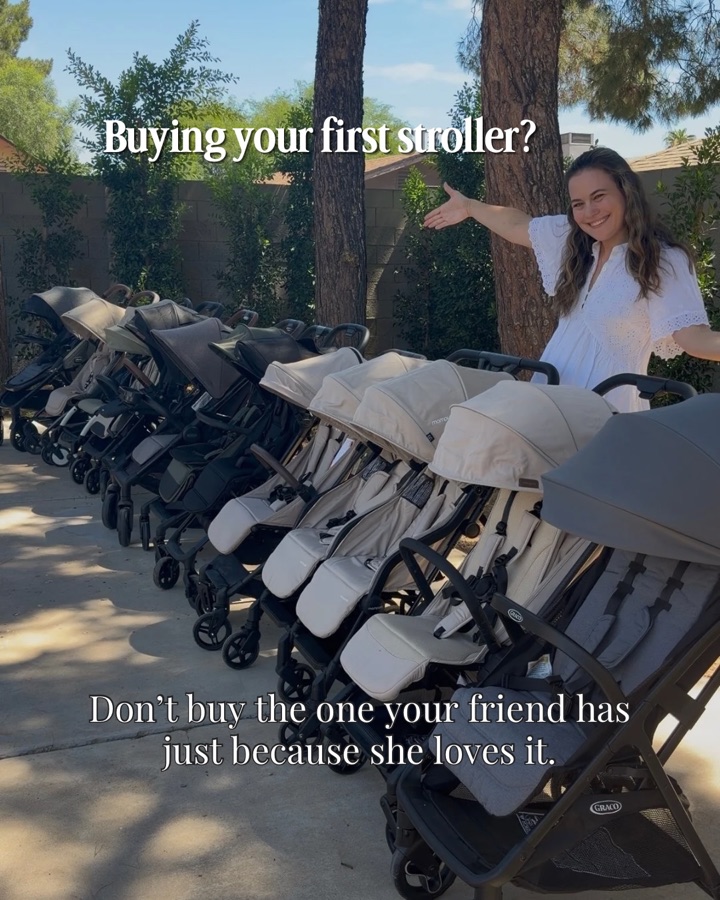
Choosing a first stroller is confusing, and a lot of advice boils down to “buy what my friend has.” This page shares a five-slide carousel from a reviewer who says she has tested more than 150 strollers, followed by our own short notes. We have not verified her testing, and we do not name or rank any model here.
The five slides
The main idea, in plain words
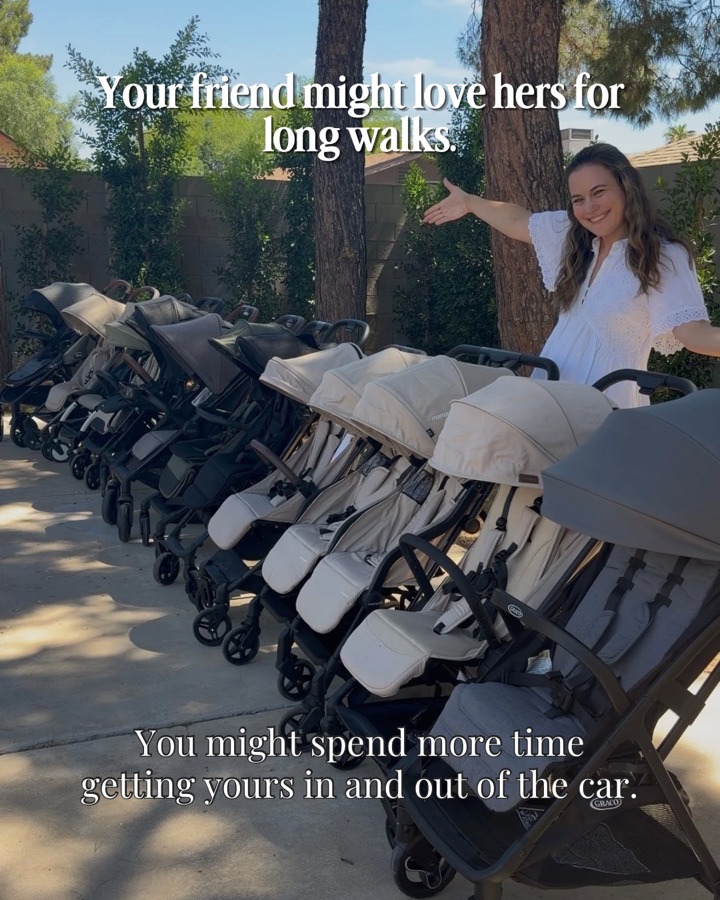
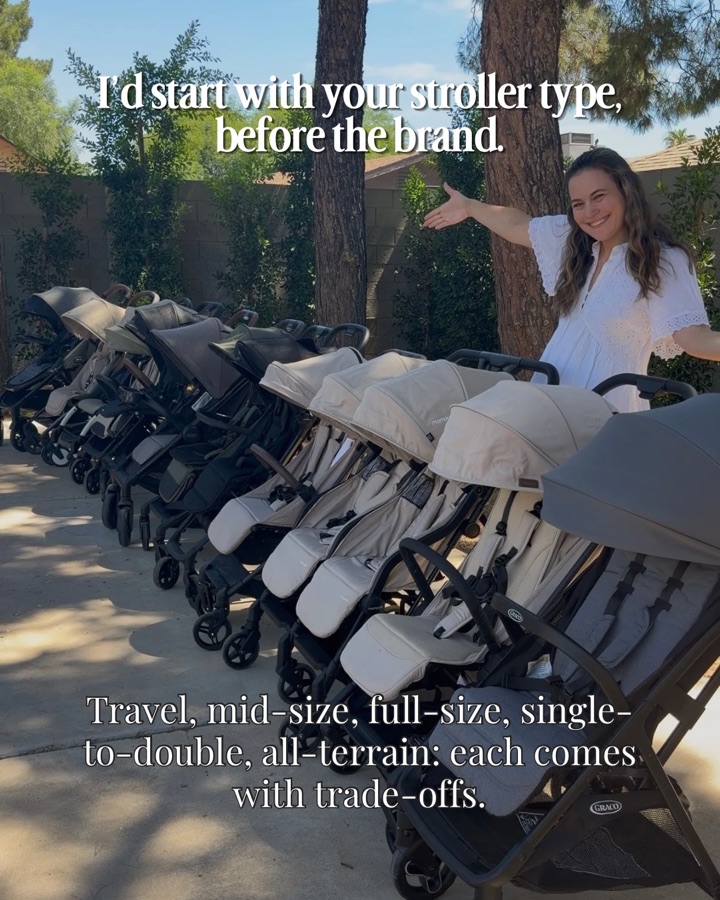
The reviewer’s point is that no single stroller wins, and the right one depends on your budget, your lifestyle and how you will use it. She gives four examples: one parent loves hers for long walks, another loses more time getting hers in and out of the car, someone runs with theirs, and someone else needs it to fit in a small trunk. Her advice is to begin with the stroller type, and only then look at brands.
Five types she lists
The slides name five types: travel, mid-size, full-size, single-to-double and all-terrain. She says each comes with trade-offs. We have not tested any of them, but as general rules of thumb: smaller folding types usually trade space for storage and ride comfort, larger types are roomier but harder to lift and store, and all-terrain types are built for rougher ground. Always check the exact model’s weight, folded size and limits.
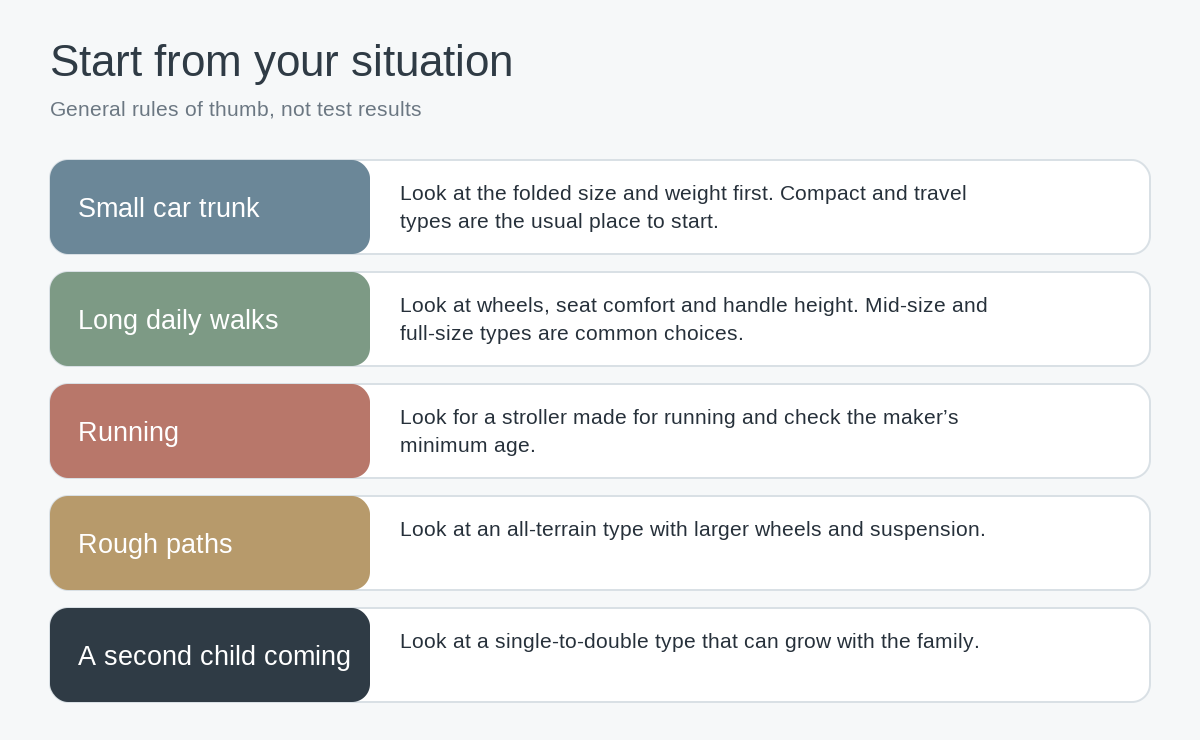
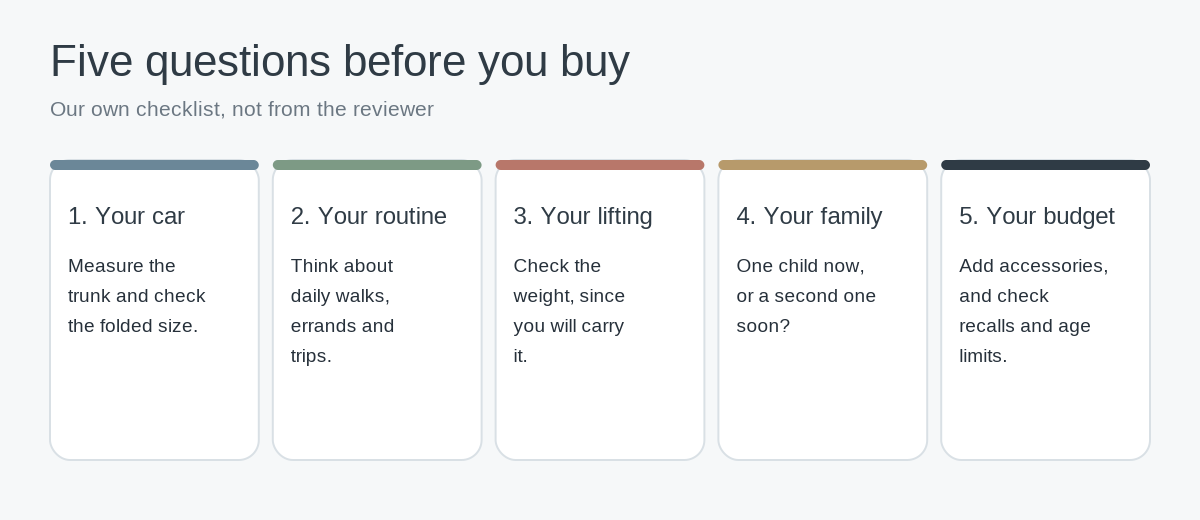
A short checklist before you buy
Safety notes
- Running: only use a stroller the maker says is suitable for running, and check its minimum age for the child. Ask a paediatrician if you are unsure.
- Limits: follow the manufacturer’s age and weight limits, and always use the harness.
- Recalls: search the maker and model on the official recall list before you buy, including second-hand.
What we cannot tell you
We cannot say which model is best, because we have not tested any. The carousel does not rank models either, and that is its strength: it helps you decide what to look for before you start comparing brands.
Bottom line: pick the stroller type that fits your car, your routine and your budget first, and only then compare models. If a friend loves hers, ask what she uses it for before you copy her choice.